
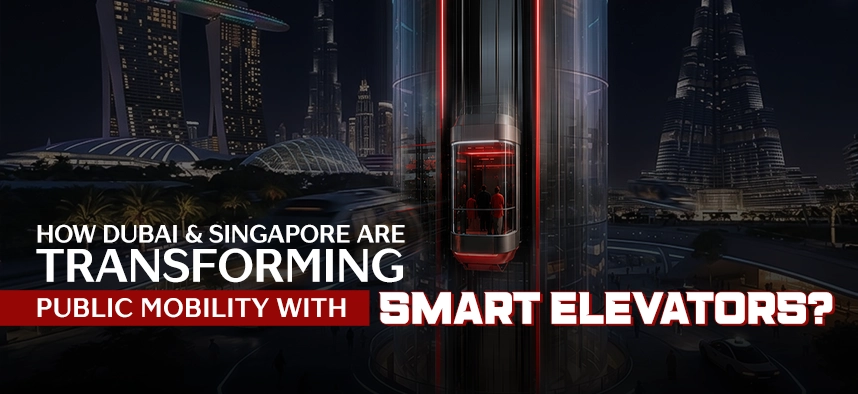
How Dubai & Singapore Are Transforming Public Mobility with Smart Elevators?
Table of Contents
- Introduction
- Why Smart Elevators Are Becoming Essential for Smart Cities
- How Dubai Is Redefining Vertical Mobility Through Smart Elevator Technology
- How Singapore Uses AI and Predictive Maintenance to Improve Elevator Performance
- 7 Smart Elevator Innovations Indian Buildings Can Adopt
- Why Intelligent Elevator Systems Are the Future of Urban Mobility
- How Epic Elevators Is Supporting India's Next Generation of Smart Buildings
- FAQs
- The Road to Smarter Cities Starts with Smarter Elevators
Introduction
When discussing urban mobility, most people think of roads, metro systems, airports, and public transportation. However, as cities continue to grow vertically, another form of mobility is becoming increasingly important: vertical transportation. Today, smart elevators are playing a critical role in helping people move efficiently through high-rise buildings, commercial complexes, hospitals, hotels, transit hubs, and mixed-use developments. In some of the world's most advanced cities, elevators are no longer viewed as standalone building components; they are considered an essential part of urban mobility infrastructure.
Cities like Dubai and Singapore have embraced smart elevator technology to improve efficiency, accessibility, sustainability, and user experience. As India continues to invest in smart cities, high-rise developments, and modern infrastructure, there is much to learn from these global leaders in vertical mobility.
What if your building could move people faster without adding more elevators?
Discover Smart Elevator SolutionsWhy Smart Elevators Are Becoming Essential for Smart Cities
Modern cities face a common challenge: moving more people through increasingly complex spaces. As urban populations grow and buildings become taller, traditional elevator systems often struggle to keep pace with demand. Long waiting times, inefficient traffic flow, and unexpected downtime can negatively impact both occupants and building operations.
This is where intelligent elevator systems make a difference.
Unlike conventional elevators, smart elevators use advanced technologies such as artificial intelligence, IoT-enabled monitoring, predictive analytics, and destination control systems to optimize performance.
The benefits include:
- Reduced waiting times.
- Faster passenger movement.
- Improved accessibility.
- Enhanced safety.
- Lower energy consumption.
- Better building efficiency.
- Predictive maintenance capabilities.
These advantages are helping smart cities create more seamless mobility experiences both inside and outside buildings.
How Dubai Is Redefining Vertical Mobility Through Smart Elevator Technology
Dubai is known for its ambitious skyline and world-class infrastructure. Home to some of the tallest buildings on the planet, the city depends heavily on efficient vertical transportation systems. To support growing populations and high-rise developments, Dubai has adopted several smart elevator innovations.
Destination Control Systems
One of the most impactful technologies being used in modern buildings across Dubai is destination dispatch technology. Instead of selecting a floor after entering the elevator, passengers choose their destination before boarding. The system then groups people travelling to similar floors together.
This approach helps:
- Reduce elevator congestion.
- Minimize unnecessary stops.
- Improve travel efficiency.
- Shorten waiting times during peak hours.
For commercial towers and mixed-use developments, destination control systems significantly improve passenger flow.
Smart Building Integration
Many modern developments in Dubai integrate elevators with centralized building management systems.
This enables real-time monitoring of:
- Elevator performance.
- Passenger traffic patterns.
- Equipment health.
- Maintenance requirements.
Building operators can quickly identify issues, optimize performance, and reduce operational disruptions.
The smartest cities are upgrading their elevators. Is your building next?
Explore Future-Ready ElevatorsTouchless and Connected Experiences
Dubai's focus on innovation has accelerated the adoption of connected elevator solutions.
Features commonly seen include:
- Mobile app elevator calling.
- Smart access card integration.
- Touchless controls.
- Voice-assisted interfaces.
These technologies improve convenience while enhancing user experience and accessibility.
How Singapore Uses AI and Predictive Maintenance to Improve Elevator Performance
Singapore is widely recognized as one of the world's smartest urban environments. The city-state has consistently invested in technology-driven infrastructure to maximize efficiency and sustainability.
Its elevator systems are no exception.
AI-Powered Traffic Management
In busy commercial buildings, hospitals, and transit hubs, elevator traffic can fluctuate dramatically throughout the day. Singapore increasingly relies on AI-powered systems that analyze passenger patterns and optimize elevator movement in real time.
These systems can:
- Anticipate peak traffic periods.
- Allocate elevators more efficiently.
- Reduce passenger waiting times.
- Improve overall building flow.
As a result, elevators operate more intelligently and respond better to changing demand.
Could your elevator system be slowing down your building's potential?
Upgrade Your Vertical MobilityPredictive Maintenance Systems
Traditional maintenance models typically address problems after equipment issues occur. Smart elevator systems take a proactive approach.
Using sensors and data analytics, elevators continuously monitor:
- Motor performance.
- Door operation cycles.
- Vibration levels.
- Energy consumption.
- Component wear.
When abnormalities are detected, maintenance teams receive alerts before failures occur.
This predictive maintenance approach helps:
- Minimize downtime.
- Reduce repair costs.
- Improve reliability.
- Extend equipment lifespan.
Energy-Efficient Elevator Technology
Sustainability is a key pillar of Singapore's urban planning strategy.
Modern elevator systems often include:
- Regenerative drive technology.
- Energy-efficient motors.
- Smart standby modes.
- LED lighting systems.
- Intelligent power management.
These features help reduce environmental impact while lowering operating costs for building owners.
What if every elevator ride felt faster, smoother, and smarter?
Explore Smart Elevator Technology7 Smart Elevator Innovations Indian Buildings Can Adopt
As India continues its rapid urban transformation, developers and building owners can benefit from adopting proven technologies already being implemented in leading smart cities.
1. Destination Dispatch Technology
Improves passenger flow and reduces travel time by grouping passengers based on destination floors.
2. AI-Based Traffic Optimization
Uses real-time data to improve elevator allocation and minimize waiting periods.
3. Predictive Maintenance
Identifies potential issues before they result in costly breakdowns or service interruptions.
4. IoT-Enabled Monitoring
Provides continuous visibility into elevator performance and equipment health.
5. Touchless Elevator Controls
Enhances hygiene, accessibility, and convenience for users.
6. Smart Access Integration
Allows elevators to integrate with security and building access systems.
7. Energy-Efficient Systems
Reduces operational costs while supporting sustainability goals.
These innovations are becoming increasingly relevant for commercial buildings, hospitals, hotels, residential towers, educational institutions, and public infrastructure projects across India.
The future of urban mobility starts inside your building. Are you ready?
View Elevator SolutionsWhy Intelligent Elevator Systems Are the Future of Urban Mobility
As Indian cities continue to build upward, elevators will play an even greater role in shaping daily mobility experiences. Future-ready buildings will require more than basic transportation systems. They will need smart, connected, and efficient vertical mobility solutions capable of supporting growing populations and evolving expectations.
Investing in smart elevator technology can help buildings:
- Improve occupant satisfaction.
- Enhance operational efficiency.
- Increase property value.
- Support sustainability initiatives.
- Reduce long-term maintenance costs.
- Strengthen overall building performance.
In many ways, elevators are becoming the backbone of modern urban infrastructure.
How Epic Elevators Is Supporting India's Next Generation of Smart Buildings
The future of urban mobility depends on intelligent infrastructure, and elevators are a vital part of that equation. At Epic Elevators, we understand that modern buildings require more than reliable vertical transportation. They require elevator solutions that combine advanced technology, safety, efficiency, and long-term performance. From residential and commercial projects to hospitals, hotels, and public infrastructure developments, our elevator solutions are designed to meet the evolving demands of India's growing urban landscape. As smart cities continue to emerge across the country, Epic Elevators remains committed to delivering innovative vertical mobility solutions that help create safer, smarter, and more efficient buildings.
What can Dubai and Singapore teach your next building project?
Explore Smart Mobility SolutionsThe Road to Smarter Cities Starts with Smarter Elevators
Dubai and Singapore have demonstrated how smart elevators can transform the way people move through buildings and urban environments. Through technologies such as destination control systems, AI-powered optimization, predictive maintenance, and energy-efficient engineering, these cities are setting new standards for vertical mobility.
For India, the opportunity is clear. As smart city initiatives expand and high-rise developments become increasingly common, adopting intelligent elevator systems will be essential for creating future-ready buildings that deliver exceptional user experiences. The cities of tomorrow won't just be connected by roads and railways, they'll be powered by smarter, more efficient vertical mobility.
Frequently Asked Questions
1. What are smart elevators?
Smart elevators use technologies such as artificial intelligence, IoT sensors, predictive maintenance tools, and destination control systems to improve efficiency, safety, and passenger experience.
2. How do smart elevators improve building efficiency?
Smart elevators optimize passenger movement, reduce waiting times, improve traffic flow, and minimize downtime through predictive monitoring and intelligent controls.
3. What is destination dispatch technology?
Destination dispatch technology allows passengers to select their floor before entering the elevator. The system then groups passengers travelling to similar destinations, reducing stops and improving efficiency.
4. How do AI-powered elevators reduce waiting times?
AI-powered elevators analyze passenger traffic patterns and allocate elevators more efficiently, helping reduce congestion and improve response times.
5. Why are smart elevators important for smart cities?
Smart elevators support efficient vertical mobility, enhance accessibility, improve sustainability, and integrate seamlessly with modern smart building ecosystems.

