

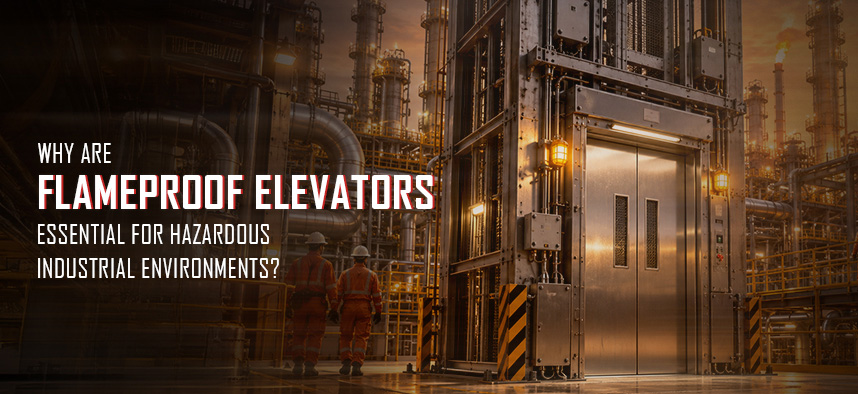
Why Are Flameproof Elevators Essential for Hazardous Industrial Environments?
In industries where flammable gases, combustible vapours, or potentially explosive dust may be present, even a small ignition source can create a serious safety risk. Manufacturing plants, chemical processing facilities, refineries, and certain storage units must therefore pay close attention to the equipment operating within these environments. This includes the systems used to move materials between floors.
A flameproof elevator can support safer vertical transportation when it is specifically designed and certified for the hazardous area in which it will operate. Unlike a standard goods elevator, a suitable hazardous-area solution must account for potential ignition sources, electrical components, operating conditions, and the nature of the materials being handled. For industrial facilities, selecting the right elevator involves more than load capacity. It requires a clear understanding of site hazards, operational requirements, safety provisions, and long-term maintenance. This guide explores why flameproof elevators matter, what to consider before installation, and how to evaluate an elevator manufacturer for industrial applications.
Table of Contents
- What Is a Flameproof Elevator?
- Why Are Flameproof Elevators Essential in Hazardous Industries?
- Flameproof Elevators vs. Standard Goods Elevators
- What Should You Consider Before Selecting an Industrial Elevator?
- How to Choose Among the Top 10 Elevator Companies in Gujarat
- How EPIC Elevators Supports Industrial Goods Movement
- FAQs
- Final Thoughts
What Is a Flameproof Elevator?
A flameproof elevator is a lifting system designed with appropriate protective measures for use in specified hazardous environments. Depending on its design and certification, its electrical enclosures and other relevant components may be constructed to prevent an internal ignition from igniting the surrounding explosive atmosphere. These elevators may be required in facilities where flammable substances are processed, stored, or transferred. However, not every industrial facility requires a flameproof elevator, and not every flameproof design is suitable for every hazardous location.
The correct solution depends on factors such as the type of hazardous substance, the likelihood and duration of its presence, the applicable hazardous-area classification, and the relevant equipment protection requirements.
Is Your Industrial Elevator Ready for Hazardous Conditions?
Discuss Your Industrial Elevator NeedsWhy Are Flameproof Elevators Essential in Hazardous Industries?
1. They Help Address Ignition Risks
Electrical equipment, motors, switching devices, and other components can become potential ignition sources under certain conditions. In an environment containing flammable gases, vapours, or combustible dust, equipment must be selected to address the specific risks present. A properly specified flameproof elevator incorporates protection appropriate to its intended hazardous-area classification. This helps reduce the risk of ignition originating from the protected equipment.
However, flameproof protection is only one part of an industrial safety strategy. The complete installation must meet the relevant requirements for the location, including the suitability of all components and associated systems.
2. They Support Safer Movement of Industrial Materials
Industrial facilities frequently need to transport raw materials, machine components, production supplies, and finished goods between multiple levels. Depending on the facility, these movements may take place near processing equipment or designated hazardous areas. A suitable goods elevator can provide a dedicated route for vertical material movement, reducing dependence on repetitive manual carrying and helping organise material-handling operations.
When hazardous-area protection is required, the elevator must be specified for the actual environment rather than selected solely because it has a heavy-duty construction.
3. They Help Maintain Operational Continuity
Factories and processing facilities often depend on the reliable movement of materials between production, storage, and dispatch areas. An elevator that is unsuitable for its operating environment can create avoidable safety concerns, maintenance challenges, and interruptions.
Selecting equipment according to the site's operating conditions can support more dependable material movement. Load requirements, travel distance, usage frequency, environmental exposure, and maintenance access should all be evaluated during the planning stage.
4. They Address Application-Specific Safety Requirements
A hazardous industrial location may require more than a protected motor or electrical enclosure. Depending on the risk assessment and applicable regulations, the installation may need suitable control equipment, wiring, sensors, door interlocks, earthing, and other protective measures.
These requirements should be established through a technical assessment. A general-purpose goods elevator should not be assumed to be suitable for a hazardous area without documented confirmation.
Moving Heavy Loads Through a Hazardous Facility? Start with the Right Lift.
Explore Goods ElevatorsWhich Industries May Require Flameproof Elevators?
The need for flameproof or other suitably protected lifting equipment depends on the specific conditions at the site. Potential applications include:
- Chemical processing plants: Facilities handling flammable chemicals, solvents, or vapours.
- Oil and gas facilities: Designated hazardous areas where combustible gases may be present.
- Paint and coating units: Areas involving flammable solvents or vapour-producing processes.
- Pharmaceutical manufacturing: Specific production or storage areas where hazardous substances or solvents are handled.
- Petrochemical facilities: Processing and storage locations with classified hazardous zones.
- Certain manufacturing and storage facilities: Areas where combustible dust or flammable materials may create an explosive atmosphere.
Not every area within these industries is hazardous, and requirements can vary significantly between locations. A qualified assessment should establish whether flameproof equipment, another type of certified protection, or a conventional industrial elevator is appropriate.
Flameproof Elevators vs. Standard Goods Elevators
Although both systems can support industrial material movement, their suitability for hazardous environments differs.
| Consideration | Standard Goods Elevator | Flameproof Elevator |
|---|---|---|
| Primary application | Moving goods between levels | Moving goods in specified hazardous areas when appropriately certified |
| Equipment protection | Based on standard operating conditions | Selected according to the classified hazardous environment |
| Electrical components | Suitable for the intended general application | Must meet applicable hazardous-area protection requirements |
| Project planning | Load, dimensions, travel, and workflow | Load, dimensions, travel, workflow, and hazardous-area assessment |
| Compliance | Applicable elevator and installation requirements | Applicable elevator requirements plus relevant hazardous-area requirements |
The key distinction is not simply that one elevator is stronger than the other. It is that a hazardous-area installation requires protection appropriate to the specific risks and documented compliance with applicable requirements.
What Should You Consider Before Selecting an Industrial Elevator?
Choosing the right system begins with understanding how materials move through the facility and what the installation must safely accommodate.
1. Load Capacity
Determine the maximum weight the elevator must carry during normal operations. Include the weight of the materials, pallets, trolleys, and any other permitted load-handling equipment. The selected capacity should reflect the intended operating pattern and applicable design requirements. Overloading must be prevented through appropriate design and operational controls.
2. Platform Size and Door Dimensions
Capacity alone does not determine whether a goods elevator will work for a factory. The platform must accommodate the actual dimensions of the largest load.
Before finalising the design, assess:
- Length and width of pallets, machinery, or materials.
- Height and clearance requirements.
- Door opening dimensions.
- Loading and unloading space.
- Trolley or handling-equipment dimensions.
Correct sizing helps prevent awkward loading practices and makes routine material movement more practical.
3. Travel Height and Number of Stops
Map the floors or operating levels that require access. Consider the total travel distance, number of stops, floor-to-floor height, and the locations where goods will be loaded and unloaded. These details help the engineering team determine a suitable configuration for the building and its workflow.
4. Operating Frequency and Workflow
A lift used occasionally to transport machinery has different requirements from one moving materials continuously throughout a production shift. Evaluate the expected number of trips, peak material movement, loading methods, and coordination between production and storage. Planning around actual workflow helps avoid unnecessary delays and mismatched equipment specifications.
5. Hazardous-Area Classification and Compliance
This is one of the most important considerations when specifying a flameproof elevator. Identify the hazardous zones, substances present, and relevant equipment protection requirements. Depending on the project, the assessment may involve applicable IECEx or ATEX requirements, Indian regulations, and the relevant elevator safety standards.
Do not assume that a product is suitable simply because it is advertised as industrial-grade or flameproof. Request documentation confirming the protection type, certification scope, component suitability, and permitted installation conditions.
6. Maintenance and Inspection
Industrial elevators operate within demanding environments and require an appropriate maintenance plan. Inspection schedules, access to components, servicing requirements, and the availability of qualified technicians should be considered before installation.
For hazardous-area equipment, maintenance must preserve the integrity of its protective features. Repairs, replacements, and modifications should be performed by appropriately qualified personnel in accordance with the manufacturer's instructions and applicable requirements.
How to Choose Among the Top 10 Elevator Companies in Gujarat
Businesses searching for the top 10 elevator companies in Gujarat should look beyond rankings and promotional claims when evaluating industrial elevator suppliers. The right partner should understand the operational demands of the facility and the technical requirements of the intended application.
When comparing elevator manufacturers in Gujarat, consider the following factors:
- Industrial application experience: Look for experience with goods elevators, factories, warehouses, or comparable industrial projects.
- Engineering and customisation: Assess whether the supplier can evaluate load capacity, platform dimensions, travel height, and site conditions.
- Hazardous-area expertise: For flameproof applications, ask for evidence of relevant certification, technical competence, and experience with the required protection systems.
- Safety and compliance documentation: Verify applicable standards, equipment ratings, testing records, and installation requirements.
- Installation and after-sales support: Evaluate maintenance arrangements, service accessibility, and technical assistance.
These criteria also help businesses compare a prospective elevator company in Gujarat with suppliers operating across India. A list of popular manufacturers may be useful for initial research, but the final selection should be based on documented suitability for the project.
How EPIC Elevators Supports Industrial Goods Movement
EPIC Elevators, based in Ahmedabad, Gujarat, offers goods elevators designed for applications including factories, storage facilities, and industrial units. Its goods-elevator offering focuses on reliable vertical transportation of heavy loads, with project requirements informing the appropriate configuration. For industrial facilities planning a new installation, the initial assessment should establish the materials to be moved, required load capacity, platform and door dimensions, travel height, frequency of operation, and available installation space.
Important for flameproof projects: A general goods-elevator offering does not, by itself, establish that a model is certified for hazardous-area use. Businesses requiring a flameproof elevator should confirm directly with EPIC whether it can provide a solution meeting the site's specific hazardous-area classification and certification requirements before proceeding.
Frequently Asked Questions
1. What is the main purpose of a flameproof elevator?
A flameproof elevator is designed for vertical transportation in specified hazardous environments, using protective measures intended to prevent the equipment from igniting the surrounding explosive atmosphere under its certified conditions of use.
2. Which industries use flameproof elevators?
Potential applications include designated hazardous areas in chemical, petrochemical, oil and gas, paint and coating, pharmaceutical, and certain manufacturing facilities. The requirement depends on the site's hazardous-area classification.
3. Can a standard goods elevator be used in a hazardous area?
Not automatically. A standard goods elevator should only be used where its design and equipment are suitable for the identified conditions. If the area is classified as hazardous, the required protection and compliance must be verified before installation.
4. What factors determine the capacity of an industrial goods elevator?
Capacity depends on the maximum load, material dimensions, pallets or trolleys, loading method, usage frequency, and the requirements of the installation. The platform and door dimensions must also suit the goods being transported.
5. How do I choose an elevator manufacturer in Gujarat for an industrial project?
Compare industrial application experience, engineering capabilities, customisation, compliance documentation, installation expertise, and after-sales support. For hazardous locations, verify the supplier's ability to meet the specific protection and certification requirements.
Final Thoughts
Flameproof elevators play an important role in industrial facilities where the surrounding atmosphere may create an explosion risk. Their value lies in providing vertical material movement through equipment selected and protected for the specific hazards of the installation. Before making a decision, evaluate the load, platform size, travel requirements, operating frequency, hazardous-area classification, applicable standards, and maintenance needs. Most importantly, verify that the proposed elevator and its components are suitable for the intended environment. For facilities in Gujarat and across India, choosing an industrial elevator supplier should be a technical decision backed by clear documentation, appropriate engineering, and a thorough understanding of the project's requirements.

