

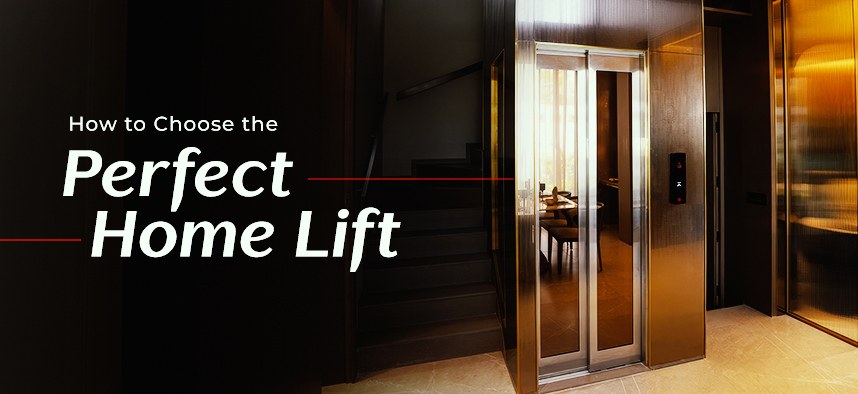
How to Choose the Perfect Home Lift in India for Your Lifestyle & Budget
Building a modern home in India is no longer just about beautiful interiors or expensive materials. Today, homeowners are designing homes that are smarter, future-ready, and more comfortable for long-term living. One feature that has become increasingly important in this shift is the home lift.
From duplex houses and independent villas to multi-storey bungalows, residential elevators are now becoming a practical necessity rather than a luxury upgrade. Families want easier mobility, safer movement for elderly parents, improved convenience, and homes that remain comfortable for decades.
However, choosing the right home lift is not as simple as selecting a cabin design or comparing quotations online. This detailed blog explains exactly how to choose the perfect home lift in India based on your lifestyle, home structure, family requirements, and budget.
Not sure which home lift fits your space and budget?
Talk to a Home Lift ExpertWhy Home Lifts Are Becoming Essential in Indian Homes
Indian residential architecture has evolved significantly in recent years. Homes are becoming taller, layouts are becoming more vertical, and families are increasingly planning for long-term convenience.
Today, many homes include:
- Duplex floor plans.
- G+2 and G+3 structures.
- Rooftop entertainment areas.
- Upper-floor home offices.
- Multi-generational family living.
While staircases may seem manageable initially, daily movement between floors eventually becomes inconvenient, especially for:
- Senior citizens
- Children
- Pregnant women
- People with mobility limitations
This is one of the biggest reasons why architects and homeowners now plan lift spaces during the construction stage itself.
A home lift is no longer viewed only as a luxury feature. It is increasingly considered:
- A convenience solution.
- An accessibility feature.
- A long-term investment.
- A future-ready addition.
Looking for a safe and stylish home lift in India?
Explore Home Lift SolutionsStep 1: Understand Your Actual Requirement
Before comparing lift brands or technologies, first understand why you need the lift.
This decision affects:
- Lift type
- Cabin size
- Speed
- Safety features
- Budget
- Installation requirements
Different households have completely different priorities.
For Family Convenience
If the lift is primarily for daily family usage, focus on:
- Smooth operation
- Comfortable cabin space
- Low maintenance
- Quiet performance
- Long-term reliability
Families using lifts multiple times daily should prioritize functionality over decorative upgrades.
For Elderly-Friendly Living
If senior citizens will regularly use the lift, prioritize:
- Soft start-stop movement
- Anti-skid flooring
- Handrails
- Wider doors
- Backup systems
- Easy controls
Ride comfort becomes extremely important in elderly-friendly homes because unstable movement can feel unsafe.
For Luxury Homes
Luxury homeowners often prioritize:
- Glass panoramic cabins
- Premium interiors
- Designer finishes
- Silent operation
- Touchscreen controls
- Architectural integration
In premium villas, the lift becomes part of the home's interior design rather than just a utility feature.
For Budget-Conscious Buyers
If budget is the main concern, focus on:
- Essential safety features
- Energy efficiency
- Reliable servicing
- Durable technology
- Lower maintenance costs
Avoid overspending on cosmetic customization initially.
Want a home lift designed for your lifestyle and space?
Request a Custom QuoteStep 2: Evaluate Your Home Structure
Your house structure plays a major role in deciding which lift type is suitable. Not every lift works efficiently in every home.
Available Space
Some lifts require:
- RCC shaft construction
- Machine room space
- Deep pit depth
- Overhead clearance
Others are designed for compact homes with minimal structural requirements.
Modern residential lifts can now fit into:
- Staircase voids
- Compact corners
- Existing homes with limited modifications
- Number of Floors
The number of floors directly affects:
- Motor requirements
- Lift speed
- Installation complexity
- Technology selection
General Recommendation
| Floors | Recommended Lift Type |
|---|---|
| Duplex / G+1 | Hydraulic or shaftless lift |
| G+2 | Hydraulic or traction lift |
| G+3 and above | Gearless traction lift |
Building a duplex or multi-floor home?
Find the Perfect Home LiftNew Construction vs Existing Home
Installing a lift during construction is always easier and more cost-effective than retrofitting later.
During Construction
Advantages include:
- Better shaft planning
- Lower civil work cost
- Easier electrical layout
- Cleaner installation
Retrofitting Later
Challenges include:
- Structural modifications
- Increased labor cost
- Space limitations
- Complex installation
Planning lift space during construction is strongly recommended, even if installation happens later.
Step 3: Understand Different Types of Home Lifts
Choosing the right lift technology is one of the most important decisions.
Hydraulic Home Lifts
Best For
- Duplex homes
- G+1 and G+2 houses
- Moderate budgets
- Families prioritizing comfort
Hydraulic lifts operate using fluid pressure systems. Their biggest advantage is smooth movement and stable ride quality.
Advantages of Hydraulic Lifts
- Smooth Ride Comfort: Hydraulic lifts usually provide soft and comfortable movement, making them suitable for family homes.
- Good Weight Capacity: They handle daily household movement effectively.
- Reliable Technology: Widely used for residential applications.
- Suitable for Low-Rise Homes: Ideal for smaller residential structures.
Limitations of Hydraulic Lifts
- Higher electricity consumption.
- Larger space requirements.
- Possible machine room requirement.
- Slower speed compared to traction lifts.
Searching for reliable home lift installation in India?
Connect With Epic ElevatorsTraction Home Lifts
Best For
- G+3 and taller homes
- Premium villas
- Frequent daily usage
- Energy efficiency
Advantages of Traction Lifts
- Lower Power Consumption: Generally, it is more energy efficient.
- Faster Operation: Better suited for taller homes.
- Quiet Performance: Especially with gearless systems.
- Long-Term Efficiency: Ideal for frequent daily usage.
Limitations of Traction Lifts
- Higher initial cost
- More precise installation planning
- Structural accuracy required
Vacuum Home Lifts
Best For
- Compact homes
- Existing buildings
- Minimal civil work
- Modern interiors
Vacuum lifts use air pressure technology and usually feature transparent cylindrical cabins.
Advantages of Vacuum Lifts
- Minimal Structural Modification
Usually require:
- No deep pit
- No large shaft
- Limited civil work
- Space Saving: Suitable for compact urban homes.
- Modern Appearance: Popular in luxury contemporary homes.
- Faster Installation: The installation process is usually quicker.
Limitations of Vacuum Lifts
- Smaller cabin sizes
- Premium pricing
- Lower load capacity
Need help choosing between hydraulic and traction home lifts?
Speak With Our ExpertsStep 4: Choose the Right Lift Capacity
Lift capacity should match your actual household requirements.
Oversized lifts increase:
- Structural cost
- Electricity consumption
- Installation complexity
Undersized lifts reduce usability.
Recommended Capacity Guide
| Requirement | Suggested Capacity |
|---|---|
| Small family | 2-person lift |
| Medium family | 3-4 person lift |
| Wheelchair accessibility | Larger cabin lift |
| Luxury villa | Customized cabin |
Most residential lifts in India range between 250 kg and 500 kg.
Step 5: Understand Home Lift Costs in India
Home lift pricing depends on multiple factors.
Average Home Lift Cost (2026)
| Lift Type | Approximate Price Range |
|---|---|
| Compact home lift | ₹5-8 Lakhs |
| Standard residential lift | ₹8-15 Lakhs |
| Premium traction lift | ₹15-25 Lakhs |
| Luxury customized lift | ₹25 Lakhs+ |
Factors Affecting Lift Cost
1. Number of Floors
More floors increase:
- Rail length
- Motor requirements
- Installation complexity
2. Lift Technology: Gearless traction and vacuum lifts generally cost more than hydraulic systems.
3. Civil Work
This includes:
- Shaft construction
- Pit excavation
- Structural reinforcement
4. Cabin Customization: Premium finishes and interiors significantly increase pricing.
Need a compact lift for your existing home?
Schedule a Free AssessmentHidden Costs Most Homeowners Ignore
Many buyers compare only installation quotations and ignore long-term ownership costs.
1. Annual Maintenance Contracts (AMC)
Regular servicing is essential for:
- Safety
- Performance
- Long-term reliability
2. Power Backup Systems: In India, backup systems are extremely important due to power interruptions.
3. Spare Parts Availability: Imported components may increase maintenance expenses and repair time.
4. Electricity Consumption: Older lift technologies may consume significantly more electricity over time.
Step 6: Never Compromise on Safety Features
Safety should always be the highest priority in a residential elevator.
Essential Safety Features
- Automatic Rescue Device (ARD): Moves the lift safely to the nearest floor during a power failure.
- Door Interlocks: Prevent accidental opening during movement.
- Emergency Alarm & Communication: Important during emergencies.
- Overload Protection: Prevents unsafe operation.
- Battery Backup: Provides temporary emergency functionality.
- Anti-Skid Flooring: Improves safety for children and elderly users.
Step 7: Choose the Right Lift Company
The quality of installation and service matters as much as the lift itself.
What to Check Before Choosing a Lift Company
- Residential Experience: Choose companies experienced specifically in home elevators.
- Service Network: Reliable after-sales support is critical.
- Installation Portfolio: Review completed projects and real installation examples.
- Spare Parts Availability: Easy availability reduces downtime.
- Safety Standards: Ensure proper certifications and compliance.
Looking for a premium residential elevator with a modern design?
View Luxury Home LiftsCommon Mistakes to Avoid
Choosing Only Based on Price
Cheap systems may compromise:
- Safety
- Ride quality
- Reliability
Ignoring Future Needs
Your current mobility requirements may change later.
Delaying Lift Planning
Late installation increases:
- Structural modifications
- Project cost
- Installation difficulty
Prioritizing Design Over Performance
Engineering quality matters more than decorative upgrades.
Which Home Lift Is Best for You?
| Requirement | Recommended Lift Type |
|---|---|
| Budget duplex home | Hydraulic lift |
| Premium villa | Gearless traction lift |
| Compact urban home | Shaftless/vacuum lift |
| Elderly-friendly home | Smooth traction or hydraulic lift |
| Frequent usage | Traction lift |
| Minimal civil work | Vacuum lift |
Final Thoughts
Choosing the perfect home lift in India is about much more than aesthetics or pricing.
The right lift should:
- Match your lifestyle
- Fit your home structure
- Provide long-term comfort
- Deliver reliable performance
- Ensure safety for your family
- Remain cost-efficient over time
A well-planned residential elevator improves not just mobility but the overall living experience inside your home for years to come.

