

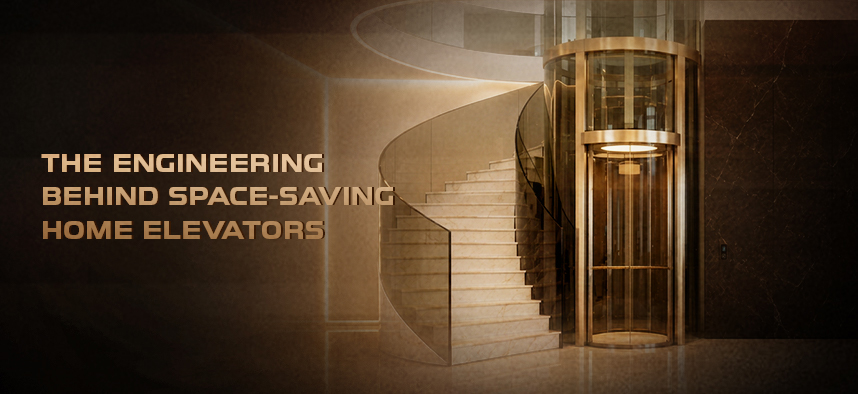
The Engineering Behind Space-Saving Home Elevators
Table of Contents
- Introduction
- Why Compact Elevator Design Matters
- Machine Room Less (MRL) Technology
- Belt Drive Engineering for Better Efficiency
- No Pit and Reduced Overhead Solutions
- Intelligent Control Systems
- Engineering That Prioritizes Safety
- Designed for Modern Architecture
- Traditional Elevators vs. Modern Space-Saving Home Elevators
- Smart Engineering That Fits Modern Living
- FAQs
- Build a Home That Moves Smarter
Introduction
Modern homes are evolving to be smarter, more efficient, and thoughtfully designed. Whether it's a luxury villa, duplex, bungalow, or multi-storey residence, homeowners today want every square foot to serve a purpose. This shift has changed how residential elevators are designed. Instead of bulky systems that demand dedicated machine rooms and extensive construction, modern space-saving home elevators are engineered to deliver exceptional performance within a compact footprint.
Behind their sleek appearance lies a combination of advanced mechanical engineering, intelligent electronics, and innovative safety technologies. Every component is carefully designed to maximize usable space without compromising ride quality, reliability, or aesthetics.
Upgrade your home with a smart, space-saving elevator.
Schedule a Free ConsultationWhy Compact Elevator Design Matters
Space is one of the most valuable assets in modern homes. Architects and homeowners aim to create open layouts, larger living areas, and flexible interiors. Installing a conventional elevator often meant sacrificing valuable floor space for machine rooms, oversized shafts, and deep pits.
Today's engineering addresses these challenges by reducing structural requirements while improving overall performance. A compact elevator allows homeowners to enjoy greater accessibility, future-ready living, and enhanced property value without disrupting the home's architectural design. Whether incorporated during construction or added to an existing home, a space-saving elevator offers both practicality and long-term convenience. Also, check out Why Capsule Elevators Are the New Status Symbol for Luxury Buildings?
Machine Room Less (MRL) Technology
One of the biggest breakthroughs in residential elevator engineering is Machine Room Less (MRL) Technology. Traditional elevators require a separate machine room to house motors and control equipment. MRL elevators eliminate this requirement by integrating the drive machinery within the elevator shaft. This innovative approach reduces construction complexity while freeing up additional space inside the home.
The benefits include:
- No dedicated machine room
- Better space utilization
- Simplified architectural planning
- Faster installation
- Lower construction costs
For homeowners, this means achieving premium mobility without compromising the home's layout.
Make every floor effortlessly accessible with a compact home elevator.
Talk to an ExpertBelt Drive Engineering for Better Efficiency
Modern home elevators increasingly use advanced belt drive systems instead of conventional steel ropes. Reinforced belts are lighter, stronger, and more flexible than traditional wire ropes. Because they require smaller pulleys and compact machinery, engineers can design elevators with smaller shafts while maintaining smooth and quiet operation.
This engineering advancement delivers several advantages:
- Reduced vibration
- Lower operating noise
- Improved energy efficiency
- Longer component lifespan
- Compact mechanical design
The result is a residential elevator that combines superior performance with efficient use of space.
No Pit and Reduced Overhead Solutions
Many homeowners assume an elevator installation requires extensive excavation or major structural changes. Modern residential elevators challenge this assumption through No Pit and Low Overhead engineering.
By minimizing pit depth and overhead requirements, these systems become ideal for:
- Existing homes
- Duplex residences
- Luxury villas
- Renovation projects
- Bungalows with limited structural flexibility
Reduced civil work not only shortens installation timelines but also minimizes disruption during construction.
Bring luxury mobility home without sacrificing space.
Get a Free QuoteIntelligent Control Systems
The control system acts as the brain of every elevator. Modern residential elevators utilize compact, high-performance controllers that occupy significantly less space than older systems while delivering greater functionality.
Advanced solutions like the EPICube Compact Control Panel provide:
- Intelligent diagnostics
- Smooth ride management
- Faster response times
- Energy optimization
- Simplified maintenance
Smaller control systems contribute to the overall space-saving design while improving operational efficiency and long-term reliability.
Engineering That Prioritizes Safety
A compact elevator should never compromise passenger safety. Modern residential elevators integrate multiple safety systems within their streamlined design.
Key safety technologies include:
- Door Anti-Clip Protection
- Automatic Emergency Rescue
- Battery Backup
- Overspeed Protection
- Emergency Alarm System
- Intelligent Braking Mechanism
These features work together to provide safe and dependable operation during everyday use as well as unexpected situations such as power interruptions.
Discover home elevators engineered for modern living.
Explore SolutionsDesigned for Modern Architecture
Today's architects consider elevators an integral part of residential planning rather than an afterthought. Space-saving engineering allows elevators to blend seamlessly into different areas of a home while preserving aesthetics and functionality.
Modern home elevators can often be installed in:
- Staircase openings
- Corner spaces
- Existing shafts
- Entrance foyers
- Central living areas
This flexibility gives architects greater creative freedom while helping homeowners maintain spacious, uncluttered interiors. Also, check out Why the Bellisimmo Home Elevator Is the Perfect Choice for Luxury Bungalows.
Traditional Elevators vs. Modern Space-Saving Home Elevators
| Feature | Traditional Elevator | Modern Space-Saving Home Elevator |
|---|---|---|
| Machine Room | Required | Not Required (MRL) |
| Shaft Size | Larger | Compact |
| Pit Requirement | Deep Pit | Minimal or No Pit |
| Installation Time | Longer | Faster |
| Energy Efficiency | Moderate | Higher |
| Suitable for Existing Homes | Limited | Yes |
| Civil Work | Extensive | Minimal |
| Ride Comfort | Good | Smooth and Quiet |
Turn limited space into limitless comfort and convenience.
Book a Free ConsultationSmart Engineering That Fits Modern Living
At EPIC Elevators, every home elevator is engineered to deliver premium mobility while making the most of available space. Technologies such as MRL Belt Technology, No Pit & No Overhead Solutions, EPICube Compact Control Panel, IoT Remote Monitoring, One-Key Calling System, and Door Anti-Clip Protection are designed to simplify installation, enhance safety, and provide a smooth riding experience.
By combining advanced engineering with elegant design, EPIC Elevators helps homeowners create accessible, future-ready living spaces without compromising on comfort or aesthetics.
Frequently Asked Questions
1. What makes a home elevator space-saving?
Space-saving home elevators use compact technologies like MRL systems, belt drives, and minimal pit requirements to reduce the overall installation footprint.
2. Can a home elevator be installed in an existing house?
Yes. Modern home elevators are designed for both new homes and retrofit projects with minimal structural modifications.
3. What is Machine Room Less (MRL) technology?
MRL technology places the drive machinery within the elevator shaft, eliminating the need for a separate machine room and saving valuable space.
4. Are compact home elevators safe?
Yes. They include advanced safety features such as emergency rescue systems, battery backup, door protection, overspeed protection, and intelligent braking mechanisms.
5. Why are belt drive systems preferred in modern home elevators?
Belt drive systems are lighter, quieter, more energy-efficient, and allow for smaller shaft designs compared to traditional rope-driven systems.
Build a Home That Moves Smarter
Choosing a space-saving home elevator is about more than adding convenience; it's about investing in intelligent engineering that complements modern architecture. From compact drive systems and MRL technology to advanced safety features and efficient control systems, every innovation is focused on maximizing space while delivering reliable performance.
Whether you're planning a new luxury residence or upgrading an existing home, selecting the right elevator ensures seamless mobility, greater comfort, and long-term value. With thoughtful engineering at its core, a modern home elevator becomes a natural extension of contemporary living rather than an addition that demands extra space.

